
Camera or gallery
Live, or from a photo you already have
Identify what is on the windowsill now, or the thing you photographed in the garden last week.
Bug identifier by photo
One photo gives you the name, what it should look like, and its role: pollinator, predator, harmless visitor or pest. Most of the time the answer is that you can leave it alone.
Free to download. Works from one photo, live or from your camera roll.
Det. from one photograph
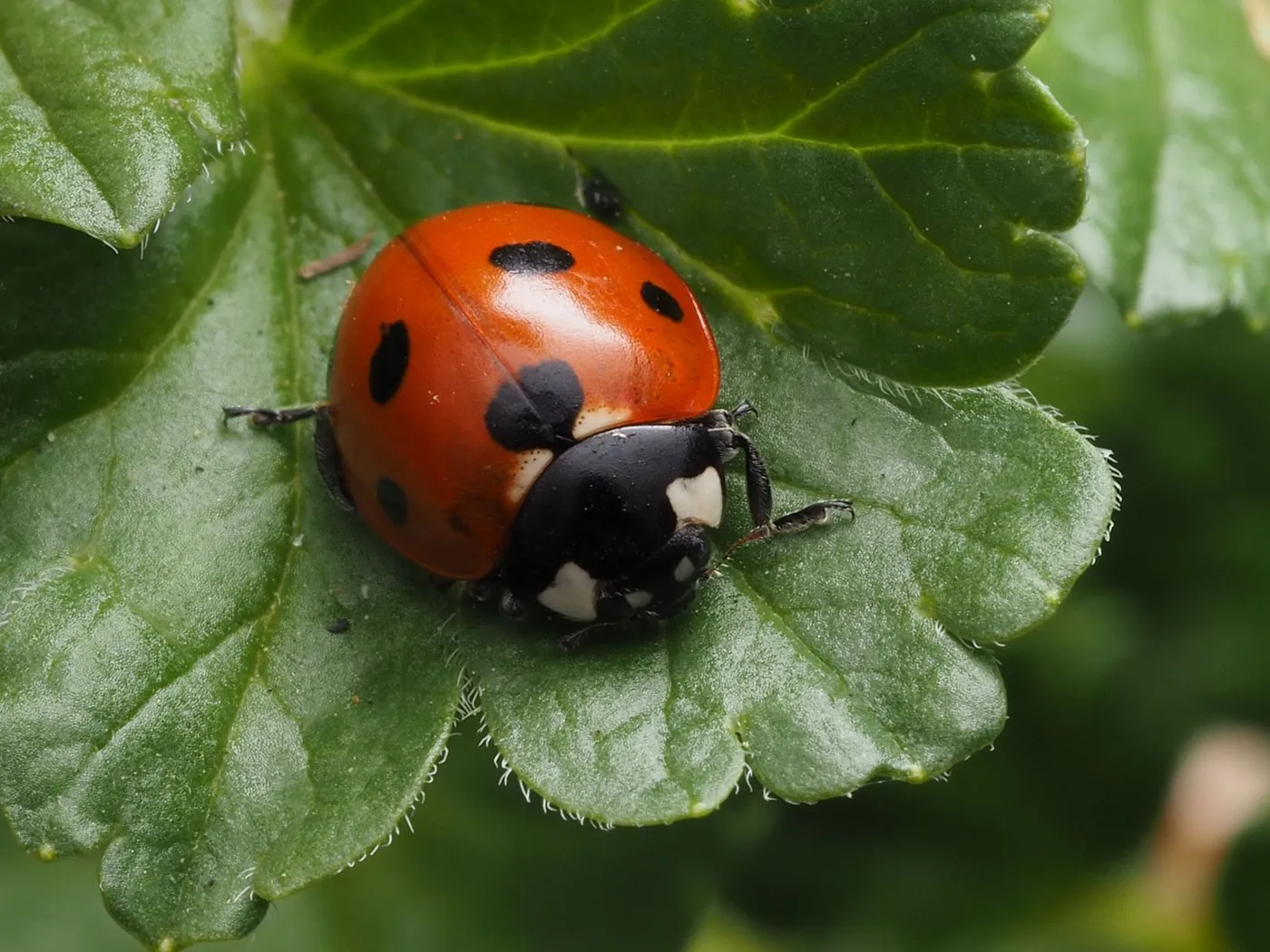
Ladybug
Bug guides
The pairs people mix up, set side by side with sizes from university extension services, and the household regulars explained.
How it works
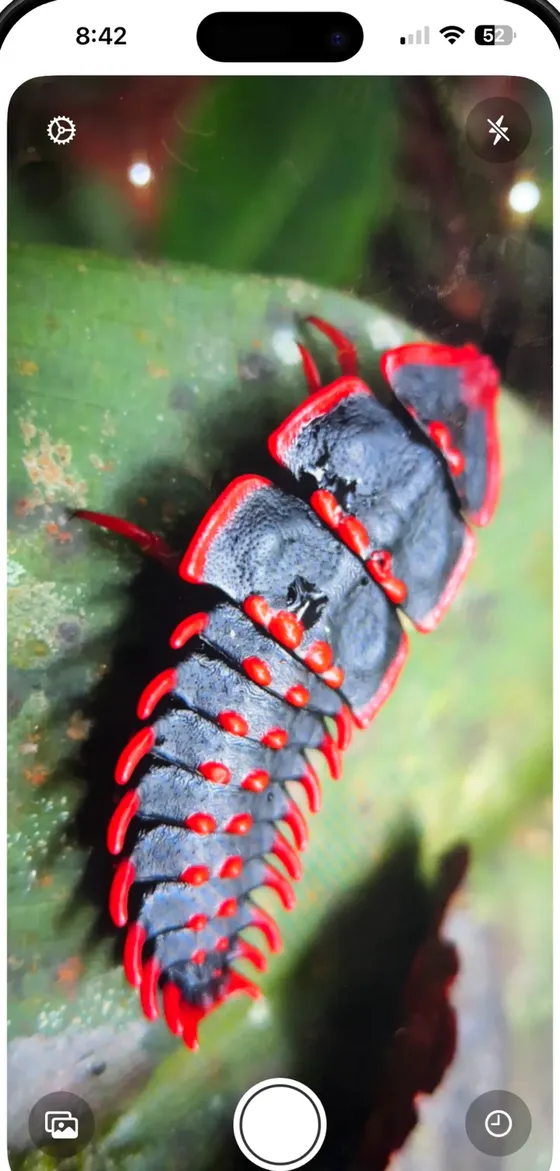
From above, in focus, as close as your phone will hold it. A coin beside it helps you later. You can also pick a photo you already took.
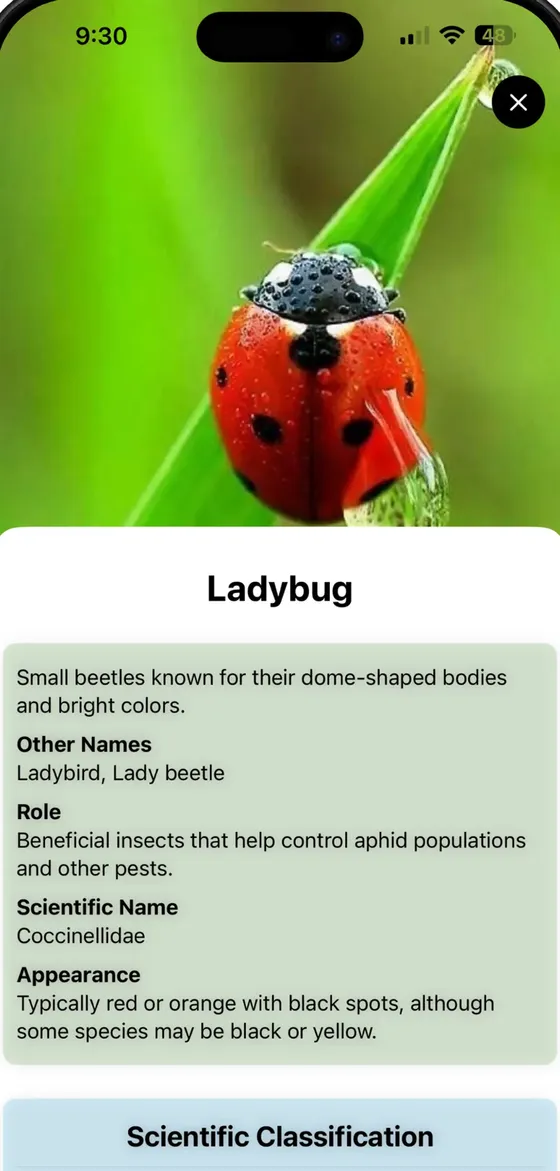
Common name, other names, scientific name and classification, what it looks like so you can check the match, and its role: pollinator, predator, nuisance or pest.
What is in the app
A name is only useful if you know what to do with it. Every result says what the insect is and what it is up to.
Identify what is on the windowsill now, or the thing you photographed in the garden last week.
Common name, the other names it goes by, and the scientific name, so you can look it up anywhere.
The result says what the insect should look like. If yours does not, you know to take a better photo.
Most insects indoors are harmless passers-by, and many in the garden are working for you. The role tells you which.
Where it sits in the insect world, which is often the fastest way to understand what it eats and how it lives.
A running record of what you have found, with the photo, so a summer of bugs becomes a list you can scroll.
Questions
Insects and their close relatives from a clear photo: beetles, true bugs, flies, ants, wasps, moths, butterflies and more. Many species can only be separated under a microscope, so some results come back at the family or genus level, which is usually what you need.
No. A bite or sting mark cannot be traced to a species from a photo, by an app or by a doctor. If you have the insect, photograph that. For a reaction to a sting or bite, contact a doctor.
It tells you what the insect is and what it does, which decides whether you need to do anything. For treatment, your local university extension service gives advice for your region, and a licensed professional handles infestations. This site gives no pesticide advice.
Free to download.

Free on iPhone. Point, photograph, read.
Free to download